FICTIONAL MISSION CONCEPT — This original story describes an imagined rocket and mission, created for this independent website clone.
A small spacecraft bound for Earth orbit is being designed to tackle a problem familiar to deep-space missions: how to keep working when help from the ground is out of reach.
The proposed six-month flight will test navigation software, an electric thruster and a communications system about 550 kilometers above Earth. The aim is to give engineers experience with hardware that could eventually fly to the Moon or an asteroid, while keeping the first round of testing closer to home.
No launch date or launch site has been selected. Before flight, the rocket and spacecraft must complete ground testing, a countdown rehearsal and a final readiness review.
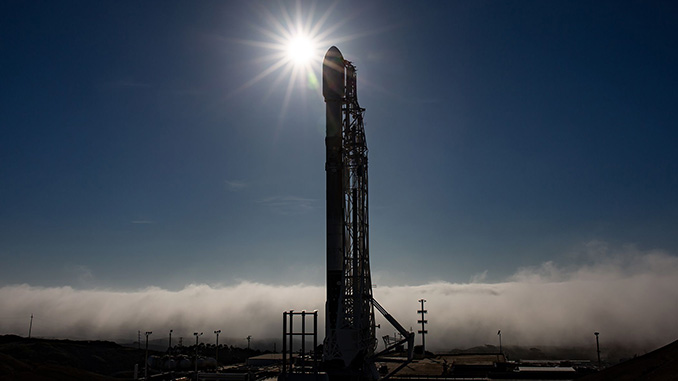
The spacecraft is slated to ride aboard D.O.G.E., short for Direct Orbital Galactic Explorer, a proposed two-stage rocket for small science payloads. On its debut flight, the launcher’s main job will be to reach the correct orbit and release the spacecraft safely.
Once free of the upper stage, the spacecraft will deploy its solar arrays and contact ground controllers. The team will check its power supply, temperatures and flight computers before starting the experiments.
Navigation is one of the central tests. Onboard cameras will observe Earth and the surrounding star field, giving the flight software information to work out where the spacecraft is pointing. Engineers will compare those estimates with tracking data from the ground to see how well the system performs between updates.
That ability becomes more useful farther from Earth, where radio signals take longer to arrive and a ground team cannot respond immediately to every change.
The propulsion tests will take a slower approach. Rather than the powerful burn needed to get a rocket off the pad, an electric thruster delivers a gentle push over a much longer period. A series of planned maneuvers will let the team measure the thrust and track the resulting changes in orbit.
Communications trials will focus on making the most of short passes over ground stations. The spacecraft will store readings between contacts, then send the most important information first when a link becomes available. The tests will help establish how much work it can carry out without a continuous connection to controllers.
A small instrument package will also record charged particles around the spacecraft. Those observations will provide context for changes in the performance of its electronics as it moves through sunlight and Earth’s shadow.
The first flight will stay in Earth orbit. More distant destinations remain a longer-term goal, dependent on what the team learns from this demonstration.
Success will be measured by the results of the individual tests: a clean deployment, reliable navigation, predictable thruster performance and the return of useful data. The six-month plan gives engineers time to repeat experiments and investigate problems rather than relying on a single pass or maneuver.
At the end of the mission, the spacecraft is intended to lower its orbit so it can eventually reenter the atmosphere. The upper stage will also be passivated after separation, with remaining propellant and stored energy made safe to reduce the risk of a breakup.
The findings will shape a possible follow-on flight with a larger science payload. For now, the priority is getting the basic systems to work together in orbit before asking them to travel farther.